01
For What It's Worth
Originally by Buffalo Springfield · written by Stephen Stills
A 1967 protest landmark written about the Sunset Strip curfew riots, gaining an eerie, dusty intimacy here.
For two decades, lionel Cohen has been taking other people's songs apart to find out what else they could be — across an industrial rock album with his NYC band The Plastic FanTastics, four folk-acoustic albums as The Cohen Brothers, a pair of cinematic trailer-music covers with vocalist Lynsey Tibbs, and standalone singles like Free Bird and Sorrow. Outside of these projects, lionel has commercially released over 300 albums, earned over 500 IMDb credits, and scored films for Sony Pictures, Lionsgate, Saban Films, and Gravitas Ventures — with music placed in American Idol, House, and Breaking Amish, and commissions from This American Life and Vanity Fair.
"The point of a cover isn't to sound like the record, it's to put your own spin on the song. Otherwise it's just karaoke."
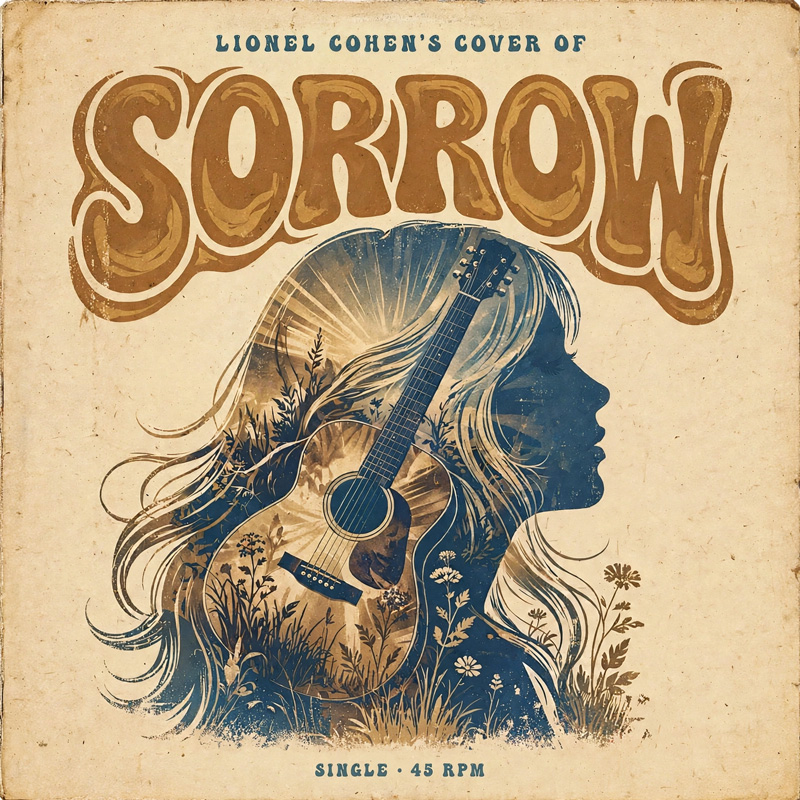
A late-70s-styled acoustic rock rebuild — acoustic guitars, B3 organs, big vocal harmonies on the chorus, and one fuzzed-out electric lead. Released under lionel's own name.
A bunch of covers in one place — The Plastic FanTastics, The Cohen Brothers, Trailer Songs, Free Bird, and Sorrow, streaming back to back.
Under the Cohen Brothers name, lionel takes songs built for stadiums and amplifiers and asks what's left when you remove all of that. It started in 2007 with Extracts from the Acoustic Sessions and grew across three more volumes, culminating in 2022's Music of the Vietnam War — a full album of protest anthems and era-defining soundtrack songs.

lionel's most thematically cohesive collection — protest anthems, psychedelic rock, and soul standards from the Vietnam era, reimagined through the quiet lens of an acoustic guitar.
Listen Now →A 1967 protest landmark written about the Sunset Strip curfew riots, gaining an eerie, dusty intimacy here.
Fogerty's class-war fury from 1969, translated into something raw and plaintive on acoustic strings.
The Stones' 1966 dark psychedelic classic, its sitar melody reimagined as a brooding acoustic meditation.
The 1964 Motown smash, stripped of its pop gloss to leave something tender and searching.
Written about the end of the band itself — its elegiac mood translates naturally to solo acoustic.
Written for the 1973 film Pat Garrett and Billy the Kid; its quiet resignation feels newly intimate.
A 1967 teen-pop song, given a wistful, almost melancholy acoustic makeover.
The album's longest track — the Stones' 1968 samba-rock epic recast as a slow, hypnotic confessional.
A 1965 folk-pop standard about longing for warmth, right at home in an acoustic setting.
The relentless 1965 Motown classic, transformed into a quiet, cornered lament.
CCR's 1970 closer about idealism worn thin — a fitting, aching end to the volume.

Ranging across '80s synth-pop, power ballads, and classic rock — from Berlin's Top Gun theme to Leonard Cohen's reverent hymn.
Listen Now →The soaring 1986 Top Gun love theme, becoming a hushed, moonlit acoustic ballad.
The 2013 emotional tour de force reborn as a stripped folk lament.
One of the most quietly devastating songs ever written, treated here with deep reverence.
Bowie's brooding 1979 new-wave deep cut, reimagined as introspective acoustic rock.
Written by Bret Michaels in a laundromat — this version returns it to its campfire roots.
The shimmering 1978 title song, reimagined as a gentle acoustic reverie.
The only original song on this volume — folk-songwriting instincts behind all of lionel's cover choices.
The 1981 synth-pop classic, given a sultry acoustic reinterpretation.
A haunting set of verses centered on longing and regret.
A tender love song, delivered in the intimate style that defines the Sessions series.
One of rock's great stand-your-ground songs, becoming quietly resilient on acoustic guitar.
Closes the album with aching beauty — Hutchence's melody undimmed.

Cohen broadening his reach — from Lou Reed's downtown sleaze to the Ronettes' girl-group pop.
Listen Now →A quietly devastating 1972 song, even more unsettling and gorgeous in acoustic form.
The pulsing 1982 synth-pop hit, reimagined as a taut, prowling acoustic number.
A song about loss and disappearance, performed here in understated folk style.
Phil Spector's Wall of Sound reduced to its bare emotional core.
The Leon Russell / Bonnie Bramlett song, already intimate, made even quieter here.
An original ballad between the classic covers.
The 1983 synth-pop ballad, translating effortlessly to acoustic folk.
Its electronic sheen peeled back to reveal a melancholy acoustic heart.
Stripped to a quiet, philosophical acoustic confessional.
Cohen's most ambitious original — a cosmic folk meditation.
A haunting closer of eerie contradictions.

Where it all began. Hard rock, soft rock, Britpop, and R&B, all reborn under the open strings of an acoustic guitar.
Listen Now →The album's longest track — an epic 1991 power ballad rendered as an intimate acoustic suite.
Soulful and reflective, at home among the iconic covers around it.
A surprising choice — its theme of restless wandering suits fingerpicked folk well.
Quietly timeless, in the tradition of classic acoustic love songs.
Bowie's 1971 song of existential crisis, stripped to bare bones from Hunky Dory.
The 1987 power ballad, distilled into a wistful acoustic moment.
A contemplative folk song about presence and impermanence.
Already one of rock's great acoustic moments, played with the reverence it deserves.
Understated and warm — a breath before the album's unexpected closer.
The 2007 global phenomenon, transformed into something delicate, folk, and hauntingly tender.
Built specifically for the screen: massive percussion, hybrid cinematic sound design, and powerhouse vocals from Lynsey Tibbs, turning familiar songs into trailer-ready anthems. Available for sync licensing with publisher approval.

Massive epic percussion, haunting piano, and Lynsey Tibbs' vocal transform this trip-hop classic into a devastatingly beautiful cinematic trailer experience.
Listen Now →
A soaring, emotionally charged reimagining driven by colossal synths, pulsing electronic layers, and Lynsey Tibbs' powerhouse vocal delivery.
Listen Now →lionel's New York band takes the opposite approach from the Acoustic Sessions — plugging in, distorting, and running everything from glam to Motown through a wall of industrial noise. Acknowledgments Pt. 1 is twelve covers deep, pulling from Iggy Pop to Michael Jackson and finding the same nerve in all of them.

Twelve industrial-rock covers of glam, post-punk, and new-wave songs, recorded by lionel Cohen's NYC band The Plastic FanTastics.
Punk sleaze rebuilt with industrial low-end and a snarl to match the original's.
Gothic post-punk turned darker still, with layers of distorted guitar under the melody.
New-wave paranoia pushed further into machine territory — fittingly, for a song about clones.
Synth-pop menace reframed as guitar-driven industrial rock, losing none of the original's edge.
Eno's glam art-rock opener, reworked with a heavier, more relentless drive.
A goth-rock highlight, treated with the same brooding energy that defines the album.
The album's boldest swing — a pop landmark rebuilt from the bassline up as industrial rock.
Freddie Mercury's ode to horsepower, revved up with distortion instead of harmony vocals.
A logical fit for the album's sound — the Velvets' proto-punk grit, amplified.
One of two Bowie covers in lionel's catalog — this one from Bowie's Low era, rendered colder and heavier.
The Beatles' darkest early lyric, matched here with the album's most aggressive arrangement.
The album's closer — a swaggering The Wall cut, turned into a wall of noise of its own.

A special one-off collaboration: rock's great arena anthem rebuilt from the ground up with acoustic guitars, resonant slide, mandolin, and the unhurried warmth of a fireside evening — with Lynsey Tibbs stepping in on lead vocals.