音楽

Asian Fusion Music · dna-productions

LiOne Ly

Ancient instruments in conversation with modern pulse.
Where gamelan echoes meet electronic silence — and silence speaks.

Explore the discography

The Works

Each album a chapter. Each chapter a place you can return to.

Lost in GAMELANd – Li One Ly
Landmark Series · 2019 · 60 Tracks

Lost in GAMELANd

A four-movement work unlike anything recorded before — a slow, deliberate descent from pure ambient atmosphere into industrial gamelan, incorporating electronics so gradually you don't notice until you're already inside it.

Pt 1
Pt 2
Pt 3
Pt 4
Ambient · Pure GamelanIndustrial · Electronic

Pt 1 opens in deep ambient stillness — unprocessed gamelan bells suspended in reverb, breathing slowly like fog over water. No beats. No pulse. Only ancient bronze allowed to ring and decay in silence.

Pts 2 & 3 introduce the first shadows. Electronic textures slowly bleed into the acoustic space. A low industrial hum. A repeating metal tone that may or may not be the instrument itself. The line blurs.

Pt 4 completes the descent — full industrial gamelan, electronics woven so deeply into the bronze fabric they become indistinguishable from it. This sonic journey has never been attempted in the recorded music canon.

Ambient gamelan to industrial electronics — a genuinely original work. Never done before.

Complete Tracklisting · 60 Tracks Across Four Parts

Pt 1 · 2019
  1. 1Ratna Manggali
  2. 2Kuningan
  3. 3Takshaka
  4. 4Setesuyara
  5. 5Barong
  6. 6Batara Kala
  7. 7Leyak
  8. 8The Awan
  9. 9Calon Arang
  10. 10Antaboga
  11. 11Galungan
  12. 12Tjak
  13. 13Rangda
  14. 14Bedwang
  15. 15Semara
Pt 2 · 2019
  1. 1Ebu Gogo
  2. 2Babi Ngepet
  3. 3Nyai Roro Kidul
  4. 4Warak Ngendog
  5. 5Wewe Gombel
  6. 6Ratu Adil
  7. 7Petruk
  8. 8Semar
  9. 9Mbok Rondo
  10. 10Batara Sambu
  11. 11Hyang
  12. 12Dewi Sekartaji
  13. 13Roro Jonggrang
  14. 14Shridevi
  15. 15Dewi Ratih
Pt 3 · 2019
  1. 1Nusantara
  2. 2Kleting Kuning
  3. 3Ratu Adil
  4. 4Durga
  5. 5Watu Gunung
  6. 6Keong Emas
  7. 7Sundel Bolong
  8. 8Banyuwangi
  9. 9Putri Tangguk
  10. 10Timun Mas
  11. 11Ksatria
  12. 12Aji Saka
  13. 13Roro Jonggrang
  14. 14Medang Kamulan
  15. 15Satrio Piningit
Pt 4 · 2019
  1. 1Damarwulan
  2. 2Minangkabau
  3. 3Sang Kancil
  4. 4Ciung Wanara
  5. 5Sangkuriang
  6. 6Mundinglaya Dikusumah
  7. 7Dayang Sumbi
  8. 8Si Leungli
  9. 9Malin Kundang
  10. 10Sidapaksa
  11. 11Twalen
  12. 12Batari Sunan Ambu
  13. 13Si Pitoeng
  14. 14Panji
  15. 15Lutung Kasarung
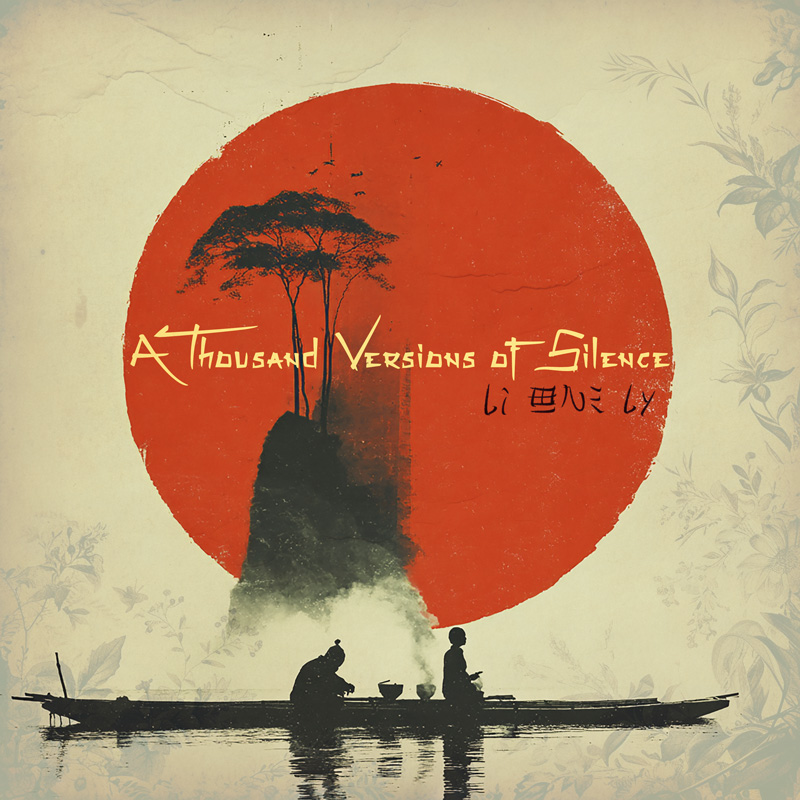
A Thousand Versions of Silence – Li One Ly
2025 · 20 Tracks

A Thousand Versions of Silence

Listen
  • 1Edge of the Earth
  • 2Waves of Forgotten Memories
  • 3Crossing Lands of Endless Memories
  • 4Whispers of the Faraway Horizon
  • 5A World Beyond the Sunset
  • 6The Silent Path of Wanderlust
  • 7In the Wake of Lost Time
  • 8Underneath the Endless Sky
Eastern Standard – Li One Ly
2020 · 18 Tracks

Eastern Standard

Listen
  • 1Only The Wisest And Stupidest Of Men Never Change
  • 2Real Knowledge Is To Know The Extent Of One's Ignorance
  • 3If What One Has To Say Is Not Better Than Silence…
  • 4One Joy Dispels A Hundred Cares
  • 5He Who Knows All The Answers Has Not Been Asked All The Questions
  • 6Do Everything In Moderation, Even Moderation
  • 7Behind Every Smile There's Teeth
  • 8Ability Will Never Catch Up With The Demand For It
Music for Traveling in Asia – Li One Ly
2018 · 16 Tracks

Music for Traveling in Asia

Listen
  • 1A Journey into Yourself2:28
  • 2The Great Unknown1:40
  • 3The Road to a Happier Life2:13
  • 4Discomfort & Sacrifice1:57
  • 5Journey of 1000 Miles3:52
  • 6Life Looks for Life2:37
  • 7Be More2:21
  • 8The New Way of Seeing Things2:25

A Meeting of Worlds

Li One Ly is a project rooted in deep listening — to the textures of traditional Asian musical forms and to the quiet spaces electronic music can inhabit. Drawing on instruments spanning millennia of craft, the work finds beauty in convergence rather than collision.

Each composition is less a performance than a meditation — a sustained inquiry into how ancient tones can inhabit contemporary space. The music asks: what does the gamelan sound like when it dreams of the future? What does the koto remember when it plays alone?

The name Li One Ly echoes both a personal identity and a state of solitary attention — the singular presence required to truly hear the old instruments speak in new forms.

ガムラン
Gamelan
Bronze percussion ensemble from Indonesia. Tuned metal keys and gongs shaped over fire — their harmonics never fully resolve, always ringing into the next breath.
Koto
Japan's national instrument. Thirteen silk strings stretched over a paulownia bridge — each pluck a calligraphy stroke in sound, precise and irreversible.
古筝
Guzheng
The Chinese zither, ancestor to the koto. Capable of sweeping glissandi and intimate tremolo — it carries millennia of dynastic memory in each vibration.
尺八
Shakuhachi
A bamboo flute carried by wandering Zen monks. Its tone lives in the space between breath and note — the sound of impermanence made audible.

On Listening

"The gamelan does not begin or end — it simply continues. We are the ones who arrive and leave."

Li One Ly approaches music not as performance but as environment. The compositions are designed to be inhabited — rooms with walls of sound, floors of low drone, windows of high shimmer. You do not consume them; you spend time in them.

The instruments chosen are not decorative. Gamelan, koto, guzheng, shakuhachi — each carries centuries of intentional use, ritual context, and philosophical weight. They are not borrowed for exotic flavor; they are engaged as living traditions that have something specific to say to the contemporary moment.

The electronic elements serve the acoustic ones — not the reverse. Synthesis and production provide space, sustain, and shadow. They extend the resonance of struck bronze and plucked silk rather than replacing it.

Silence is the fifth instrument. Every pause is composed, every gap is held. In the tradition of the shakuhachi, the breath between notes is as meaningful as the note itself — perhaps more so.